
Bordeaux
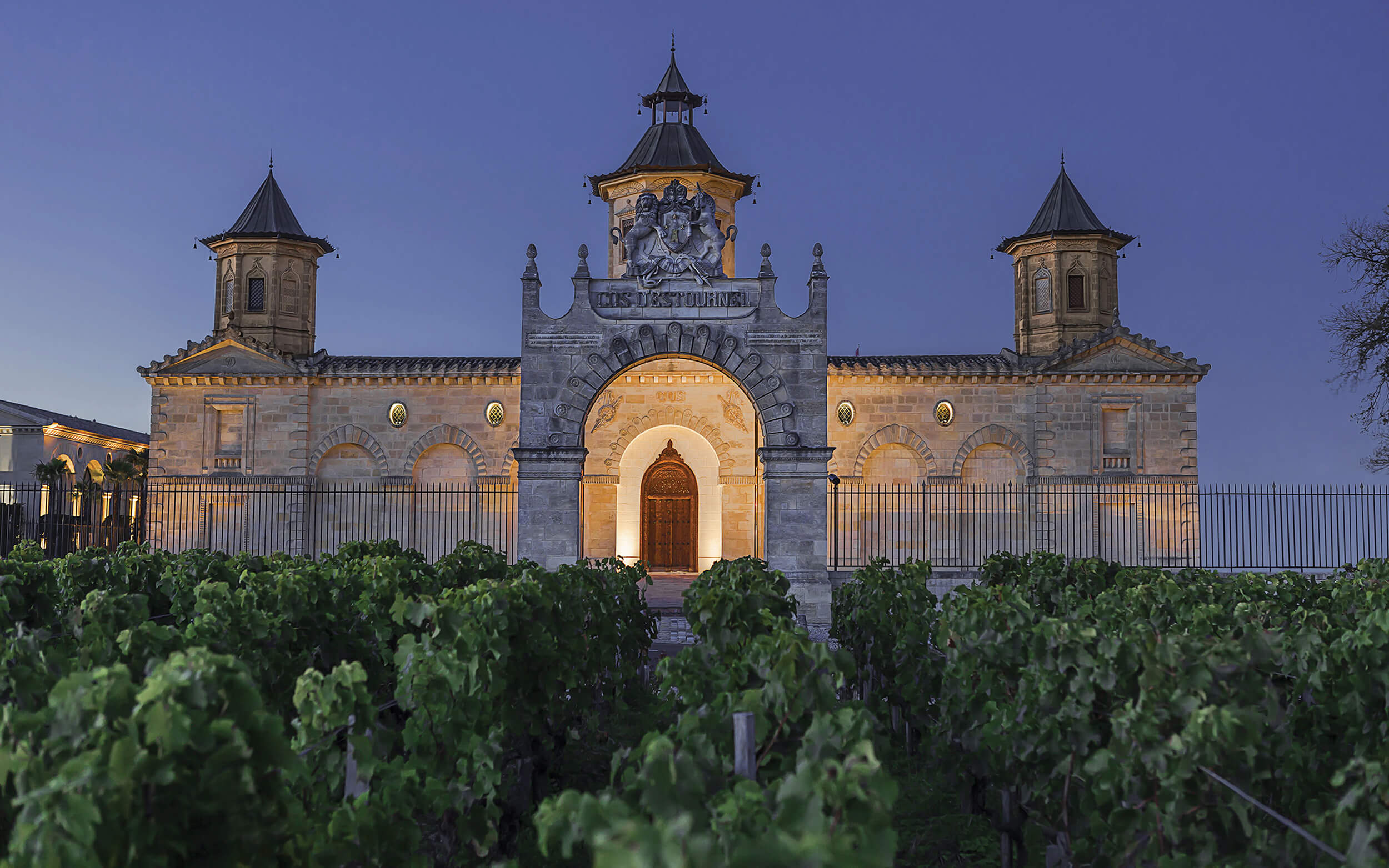
Classified as Second Growth in 1855, Château Cos d'Estournel has long stood apart for its distinctive architecture, powerful terroir identity and highly recognisable style combining depth, structure and exotic refinement. Located on the gravel rises overlooking the Gironde estuary, Cos d'Estournel produces some of the most age-worthy and internationally sought-after wines of Bordeaux.
The name "Cos" derives from the Gascon word meaning "hill of pebbles," a direct reference to the estate's exceptional gravel terroirs near the Gironde estuary. These deep gravel soils provide ideal drainage and contribute to the structure, concentration and longevity that define the wines of Cos d'Estournel.
The vineyard extends over around one hundred hectares planted predominantly with Cabernet Sauvignon alongside Merlot, Cabernet Franc and Petit Verdot. Compared with other estates of Saint-Estèphe, Cos d'Estournel often shows a more refined and polished profile while preserving the depth and structure characteristic of the appellation. Alongside the Grand Vin, the estate also produces Les Pagodes de Cos, its second wine.

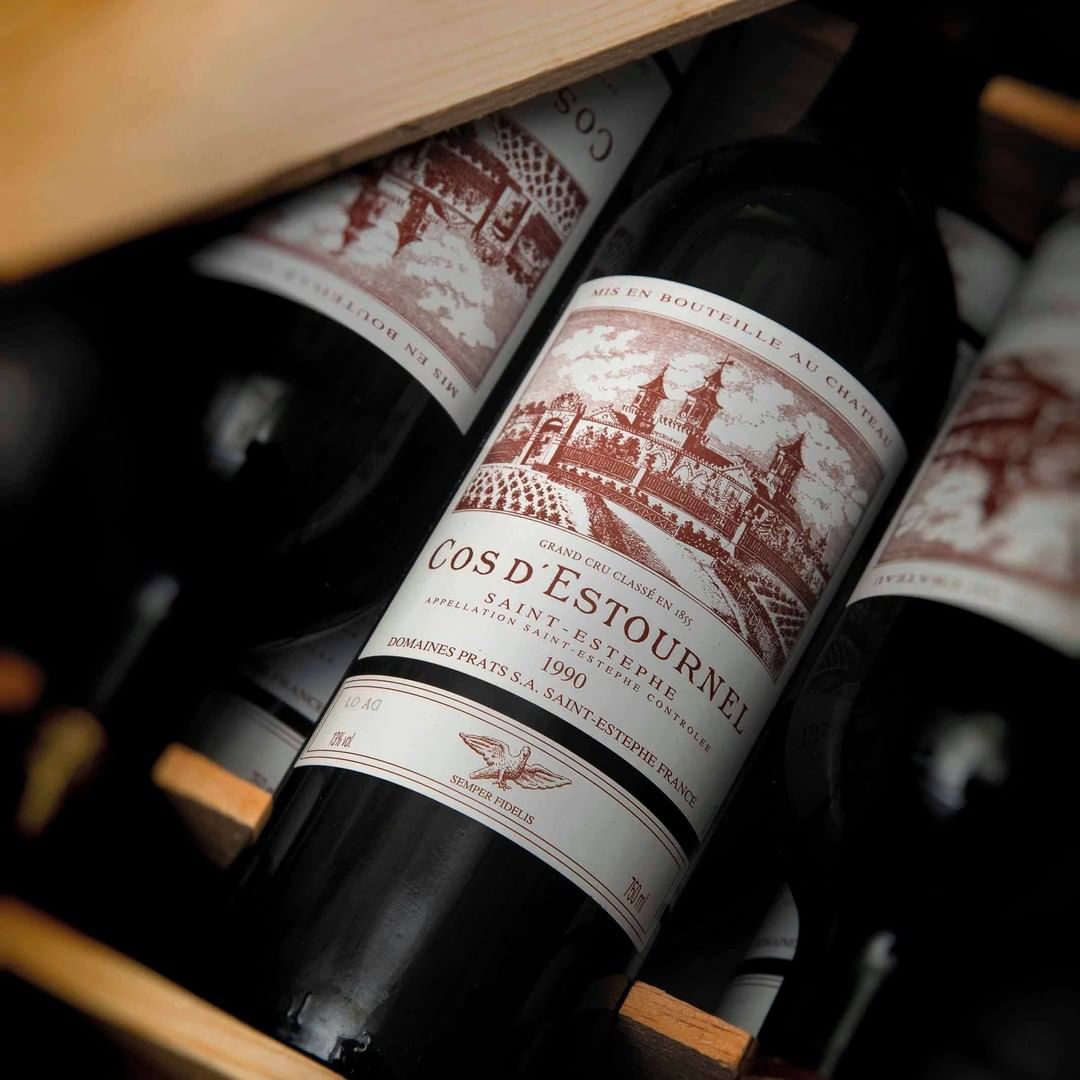
Viticulture at Château Cos d'Estournel combines meticulous parcel management with a long-term focus on vineyard balance and terroir expression. Harvesting is carried out entirely by hand, with rigorous selection both in the vineyard and cellar. Each parcel is vinified separately to preserve the precision and individuality of the terroirs before blending.
The estate became particularly recognised for its highly advanced gravity-flow winery, designed to minimise mechanical intervention and preserve the integrity of the fruit throughout vinification. Fermentations take place in temperature-controlled vats adapted to the profile of each parcel, followed by élevage in French oak barrels. The finest vintages regularly age for several decades.
One of the most visually distinctive estates in Bordeaux, Château Cos d'Estournel is renowned for its remarkable oriental-inspired architecture. Conceived in the 19th century by Louis-Gaspard d'Estournel, the château reflects the fascination for India and the East that accompanied the estate's early commercial success abroad. The property is instantly recognisable for its pagodas, sculpted elephants, carved wooden doors and richly decorated façades. Despite these exotic influences, the estate remains deeply anchored in its Saint-Estèphe terroir: a balance between power and refinement, tradition and openness to the world.
