
Bordeaux
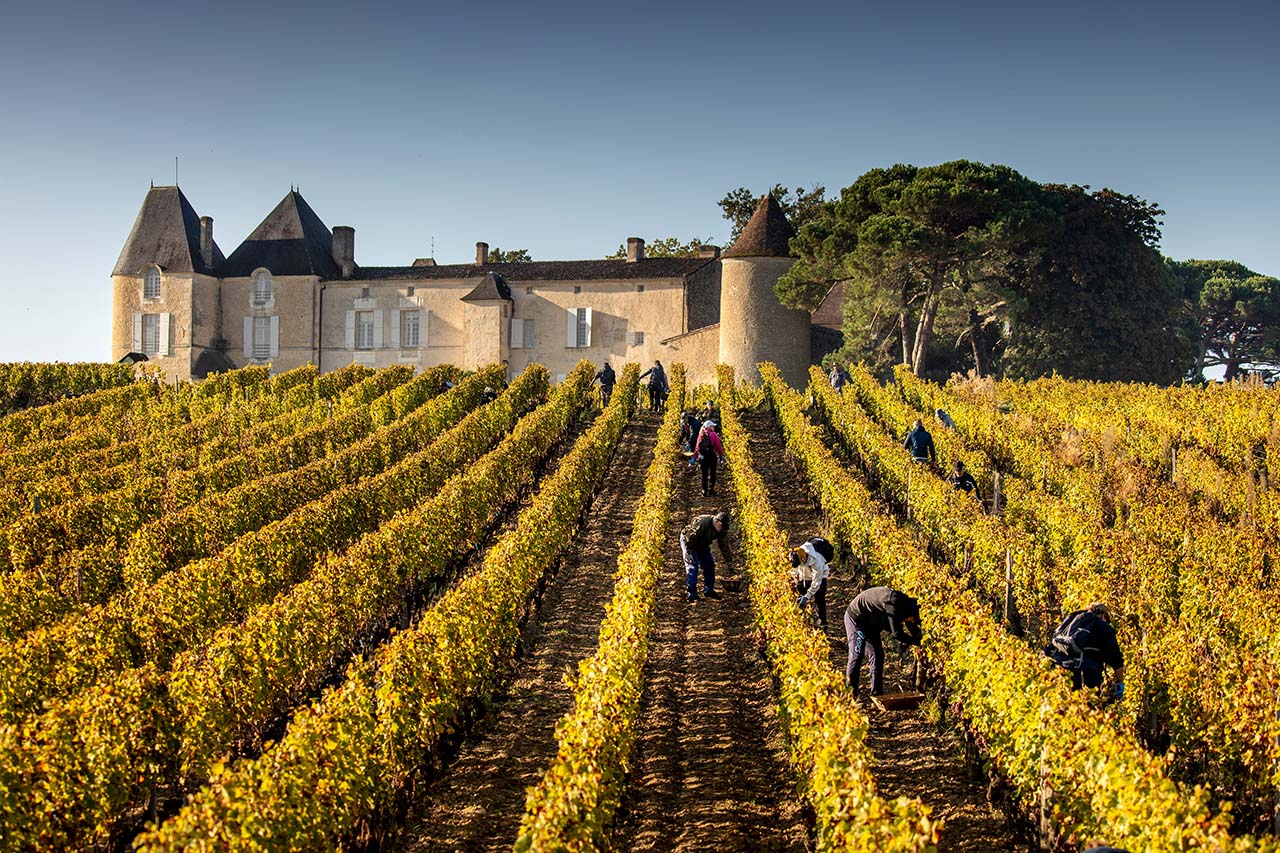
Château d'Yquem exists in a category of its own. The only estate classified as Premier Cru Supérieur in 1855, it stands apart not only within Sauternes, but within the entire wine world. Here, sweetness is not a style, but a consequence of precision, patience and selection pushed to its limits.
Located on the highest point of Sauternes, Château d'Yquem benefits from a combination of elevation, drainage and microclimate unique within Bordeaux. Morning mists rising from the Ciron river encourage the development of noble rot, while the warmer afternoons preserve freshness and concentration.
The estate covers more than one hundred hectares, primarily planted with Sémillon alongside Sauvignon Blanc. What distinguishes Château d'Yquem is not simply the presence of botrytis, but the extreme level of selection carried out in the vineyard. Harvest takes place through multiple passes entirely by hand, sometimes berry by berry, with only perfectly botrytised fruit retained for the final wine. In difficult vintages, the estate may decide not to produce Château d'Yquem at all, a level of selectivity almost unmatched in the wine world.


At Château d'Yquem, every stage of production is designed around patience and precision. Harvest is carried out through successive passes, sometimes up to thirteen, with pickers selecting only berries affected by perfect botrytis. This level of selection dramatically reduces yields, often to less than 900 litres per hectare, among the lowest of any estate in the world.
Fermentations take place in French oak barrels, with élevage lasting around twenty months in a high proportion of new oak. Despite the wine's richness and residual sugar, Château d'Yquem is defined by its freshness, structure and energy. The extraordinary longevity, often extending well beyond a century in the greatest vintages, combined with extremely limited production and global demand, has made Château d'Yquem one of the most sought-after and collectible wines in the world.
Château d'Yquem joined the LVMH group in 1999. Since becoming part of the group, the estate has continued to preserve the uncompromising philosophy that has defined it for centuries: extreme selection, meticulous vineyard work and a relentless pursuit of quality above volume.
