
Burgundy

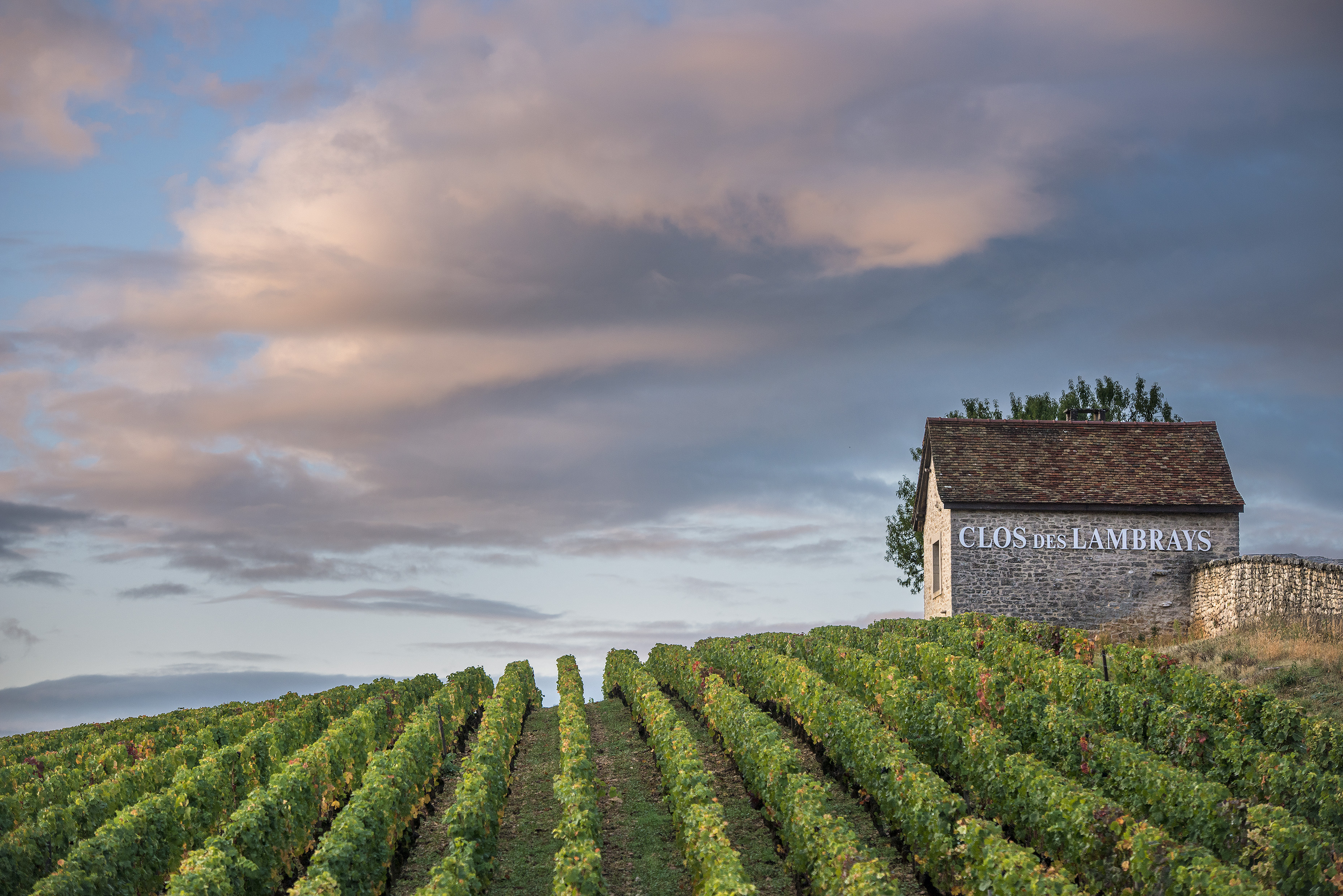
Domaine des Lambrays is one of the historic estates of the Côte de Nuits, located in Morey-Saint-Denis between Gevrey-Chambertin and Chambolle-Musigny. The domaine is inseparable from its Grand Cru monopole, Clos des Lambrays, one of Burgundy's great historic vineyards.
The history of Domaine des Lambrays dates back to the 14th century, with Clos des Lambrays forming the historic heart of the estate and one of the oldest enclosed vineyards in Burgundy. Fragmented after the French Revolution, the Clos was progressively reassembled throughout the 20th century before returning to its current unity.
Today, the domaine is centred around the 8.7-hectare Clos des Lambrays Grand Cru monopole, but also includes a range of parcels across Morey-Saint-Denis and neighbouring villages. These holdings, planted primarily to Pinot Noir with some Chardonnay, reflect the diversity of terroirs found throughout the Côte de Nuits.
Within Clos des Lambrays itself, the vineyard rests on a complex mosaic of clay, marl and limestone soils, with significant variations depending on altitude and exposure. The lower sections bring structure and depth, while the more limestone-rich mid-slope contributes finesse and tension. Higher up the slope, rockier soils provide freshness and verticality, giving the Grand Cru its distinctive balance between density, precision and elegance.
.jpg)
Vineyard work at Domaine des Lambrays is guided by careful observation, restrained intervention and along-term focus on soil health and vine balance. Harvesting is carried outentirely by hand with rigorous sorting both in the vineyard and at the cellar.
In the cellar, vinification is adapted to the character of each vintage, with fermentations relying on indigenous yeasts and careful management of extraction to preserve finesse. The wines are aged in French oak barrels, with the proportion of new oak calibrated to the appellation and vintage profile, before bottling with minimal intervention.
The result is a range of wines defined by the precision and complexity for which Clos des Lambrays Grand Cru is recognised: structured, age-worthy, and rooted in one of Morey-Saint-Denis's most singular terroirs.
In 2014, Domaine des Lambrays was acquired by the LVMH group, marking an important new chapter in the estate's modern history. Since joining the group, the domaine has benefited from significant investment in both vineyard and winery, while maintaining a strong commitment to preserving the identity and heritage of Clos des Lambrays.
